Human Anatomy
Photos 1:
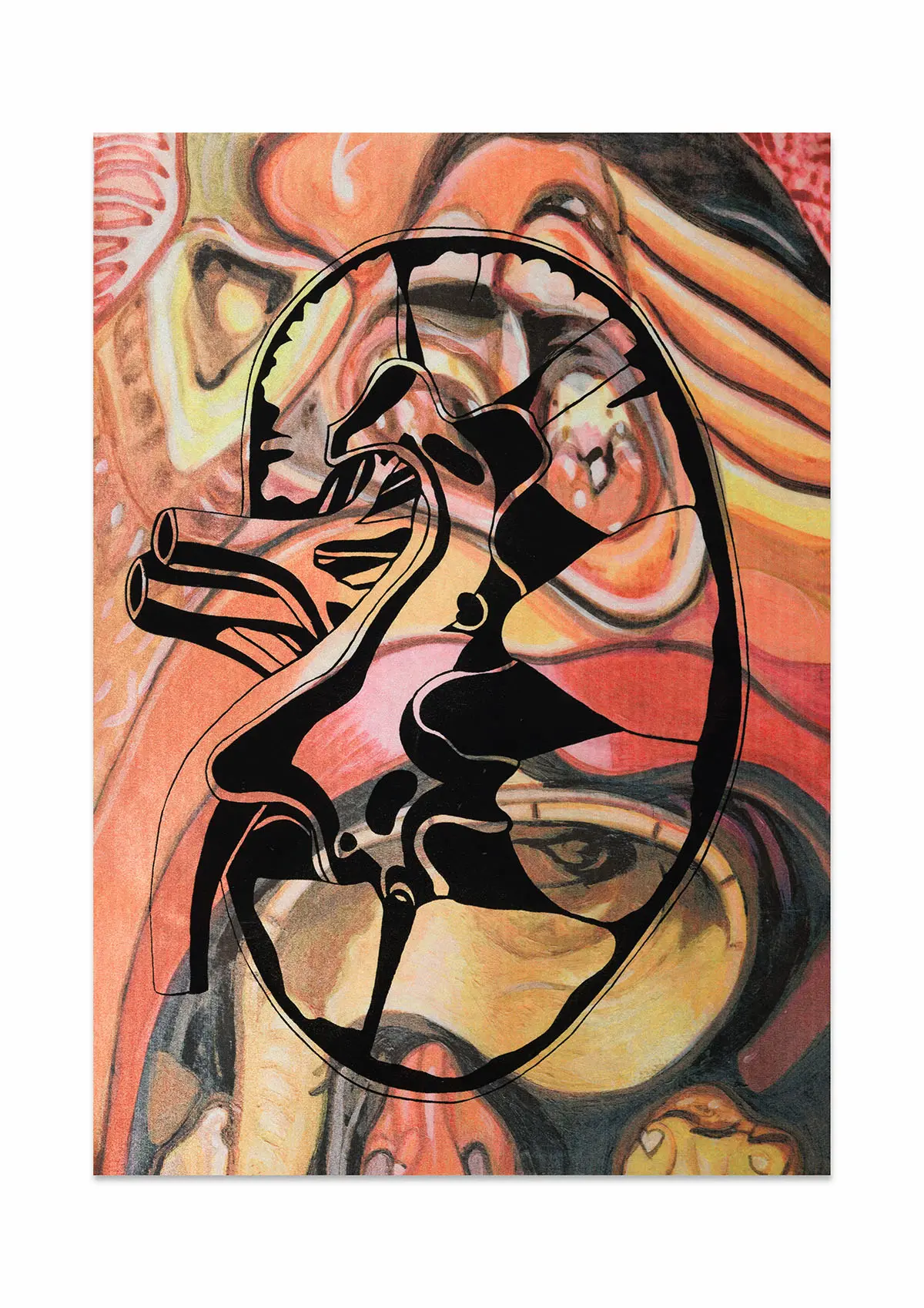
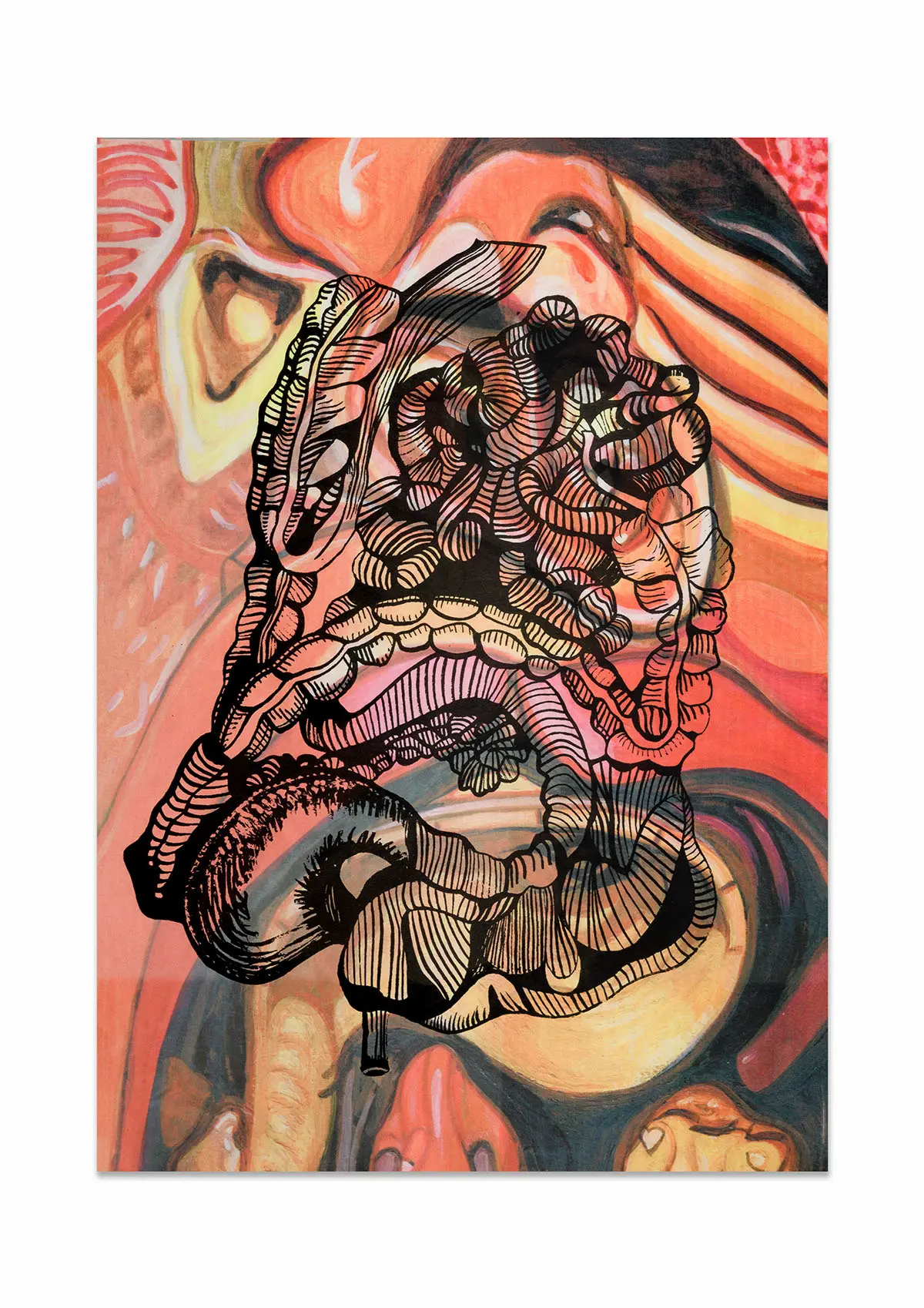
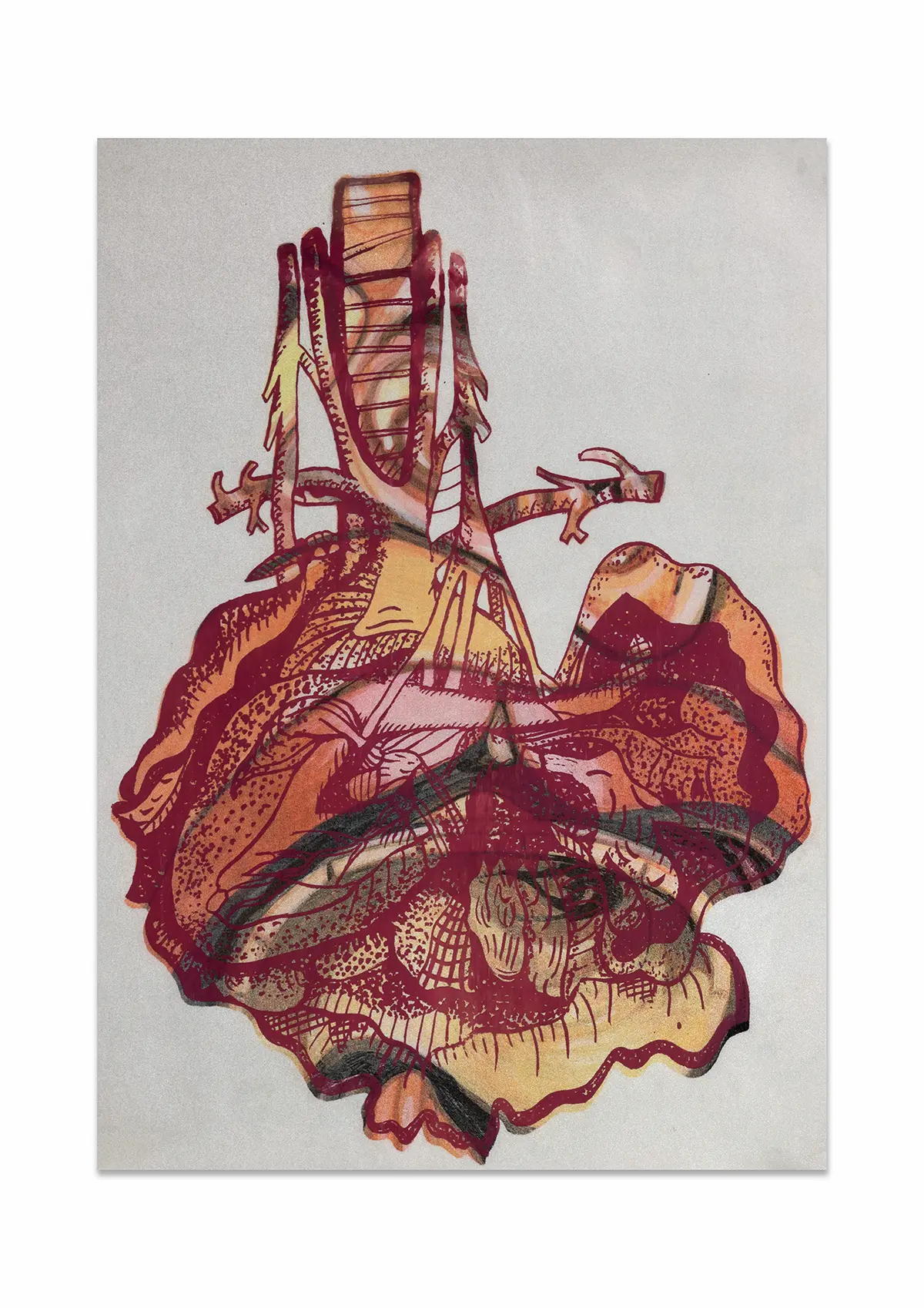
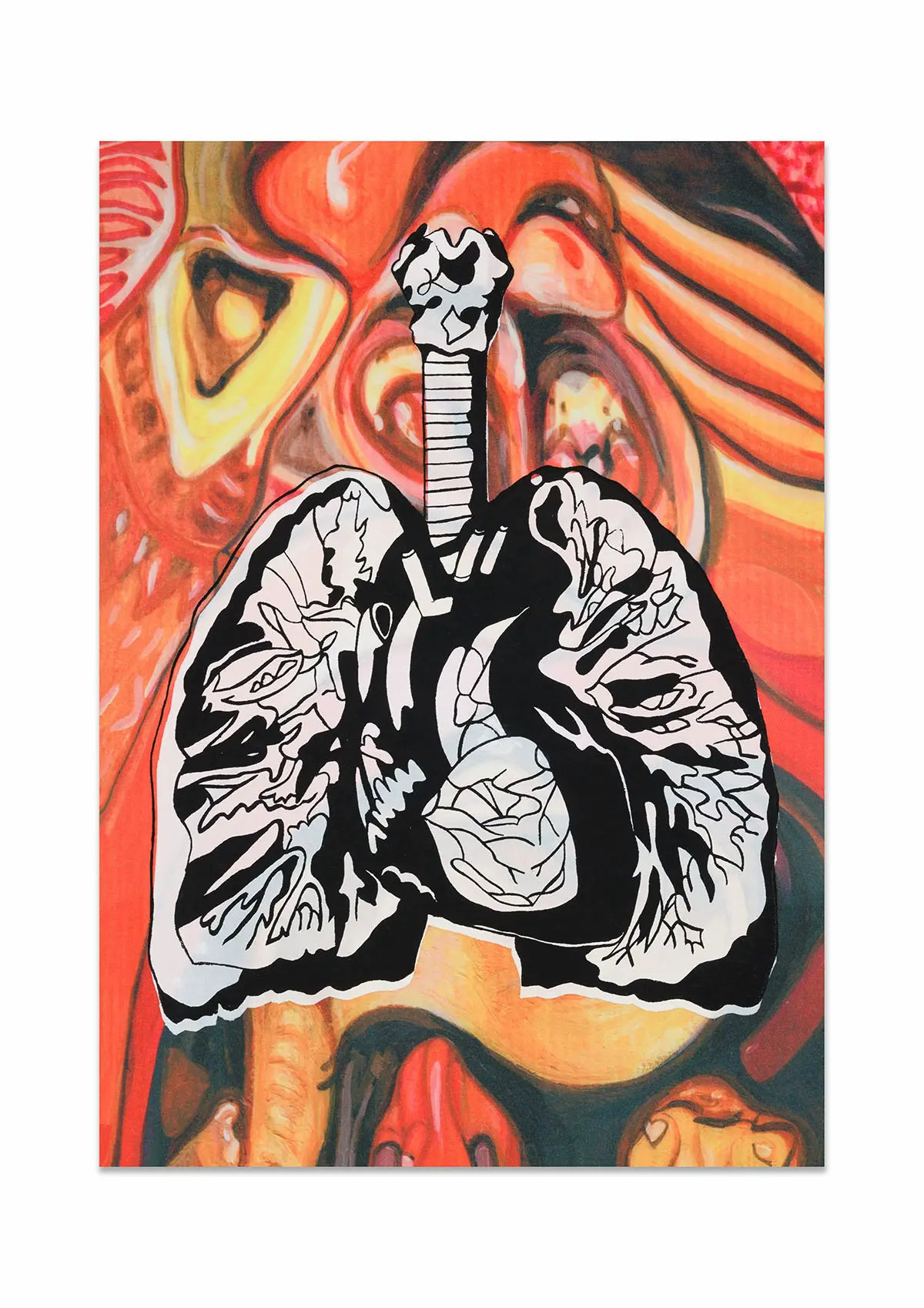
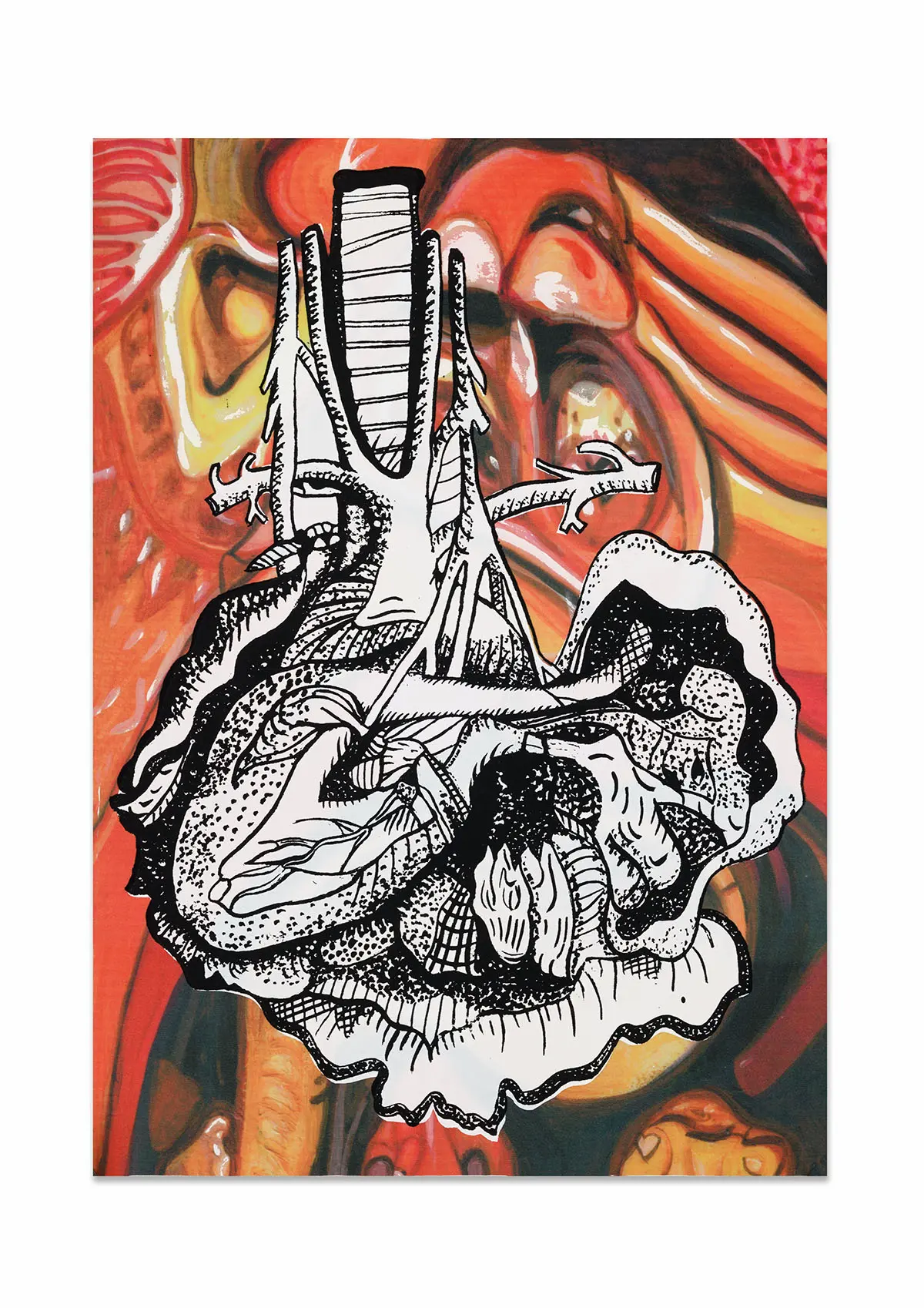
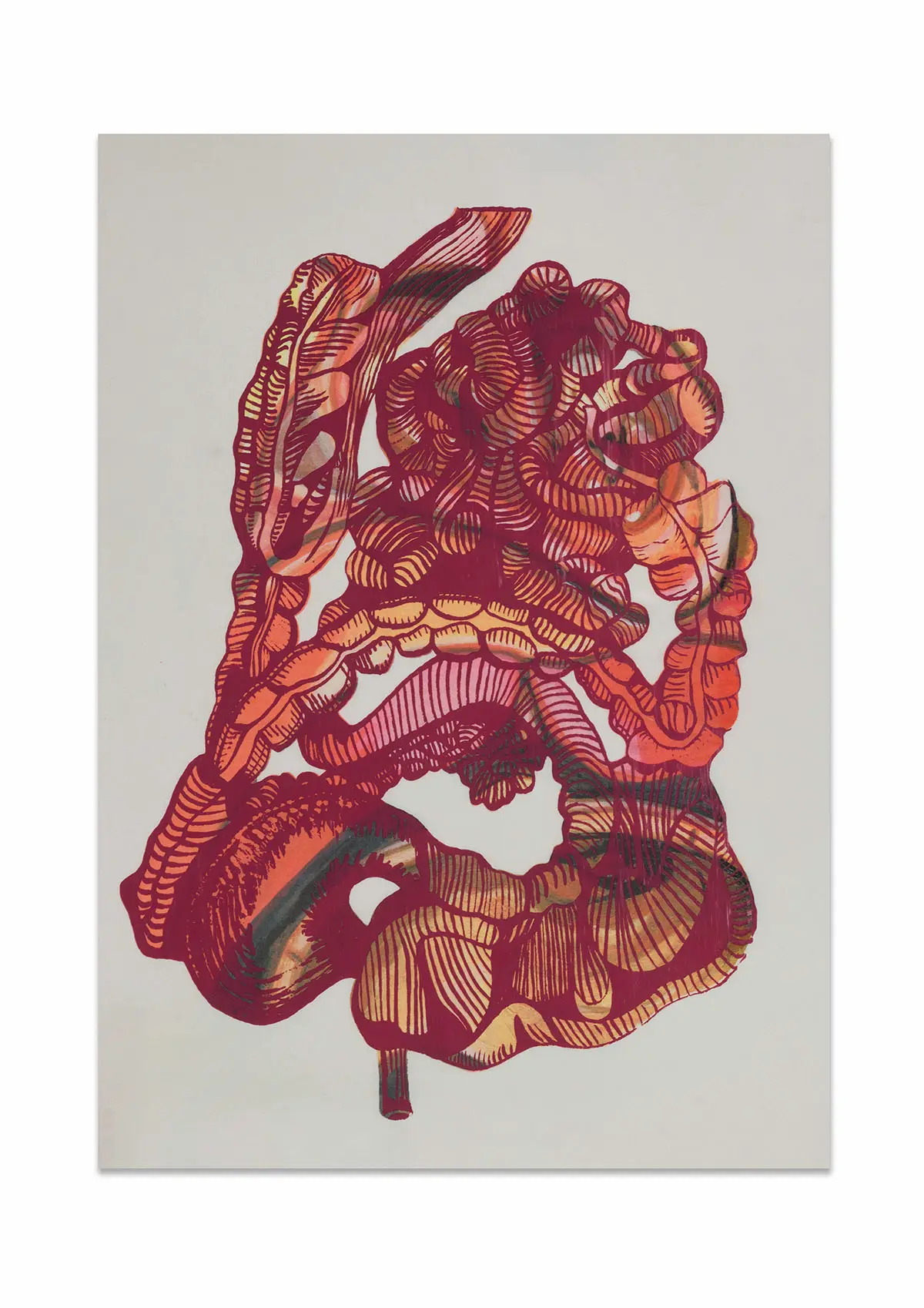
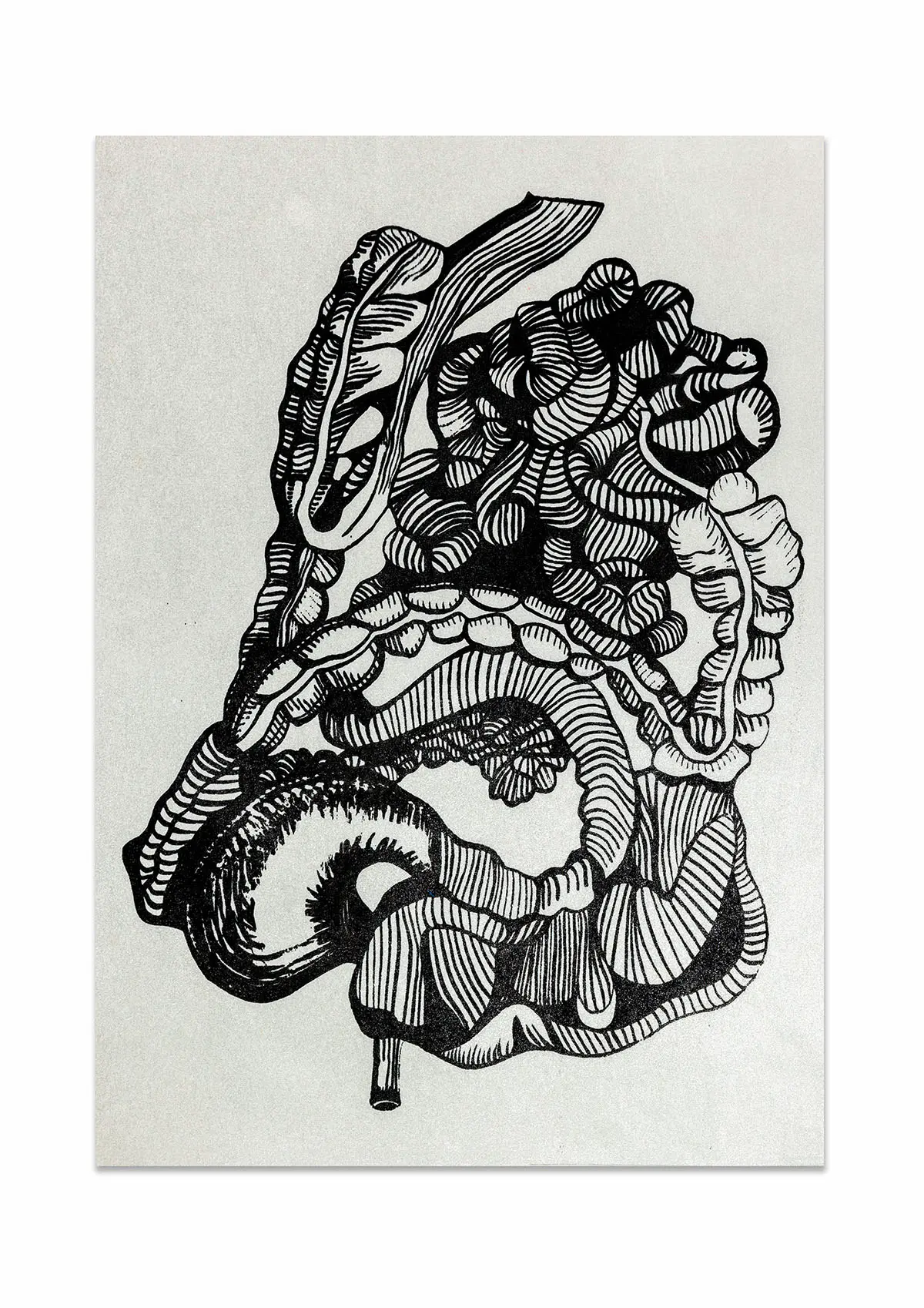
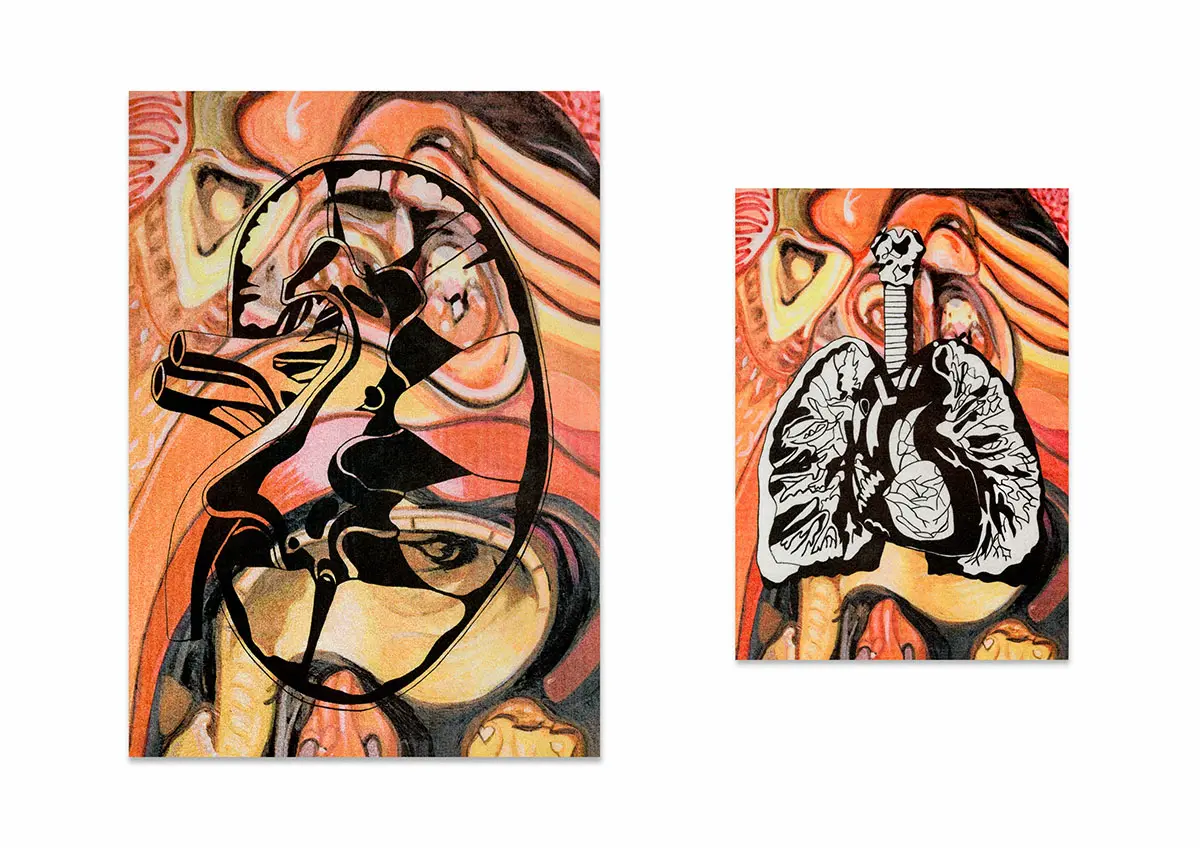
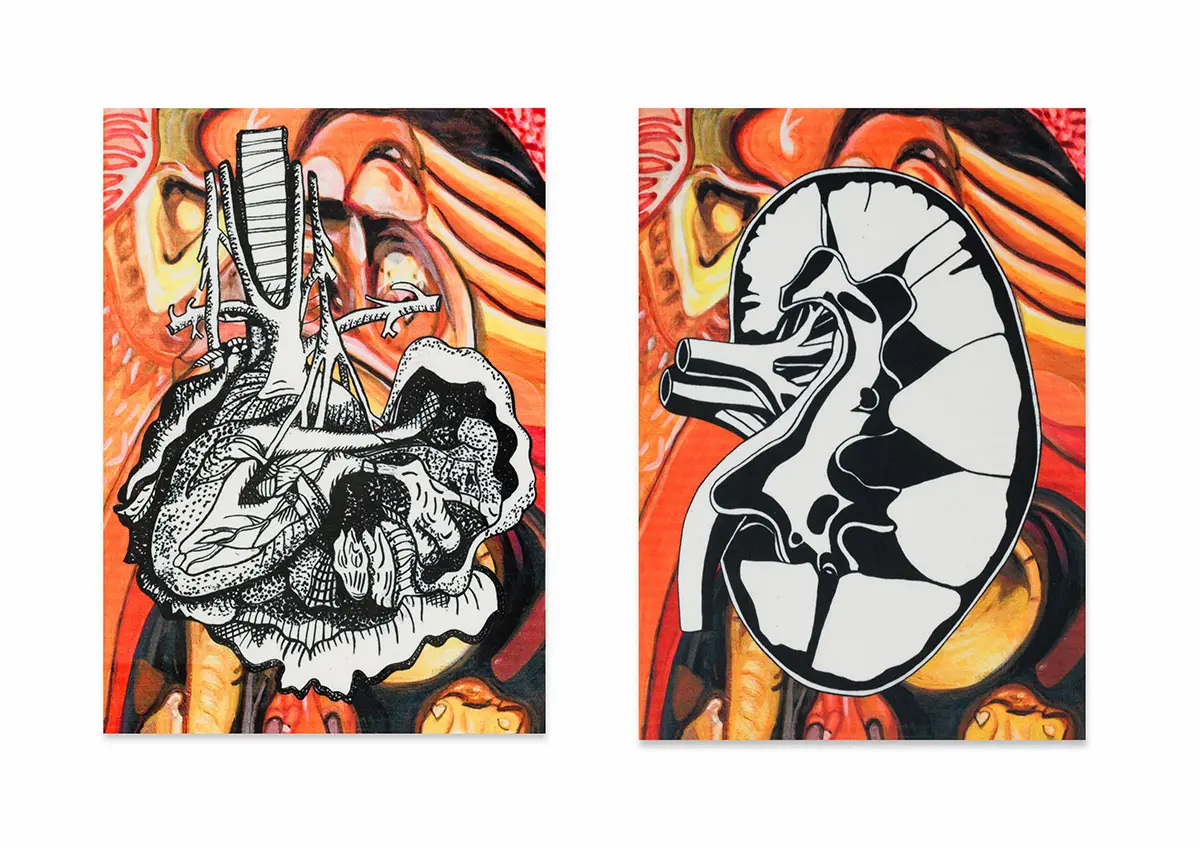
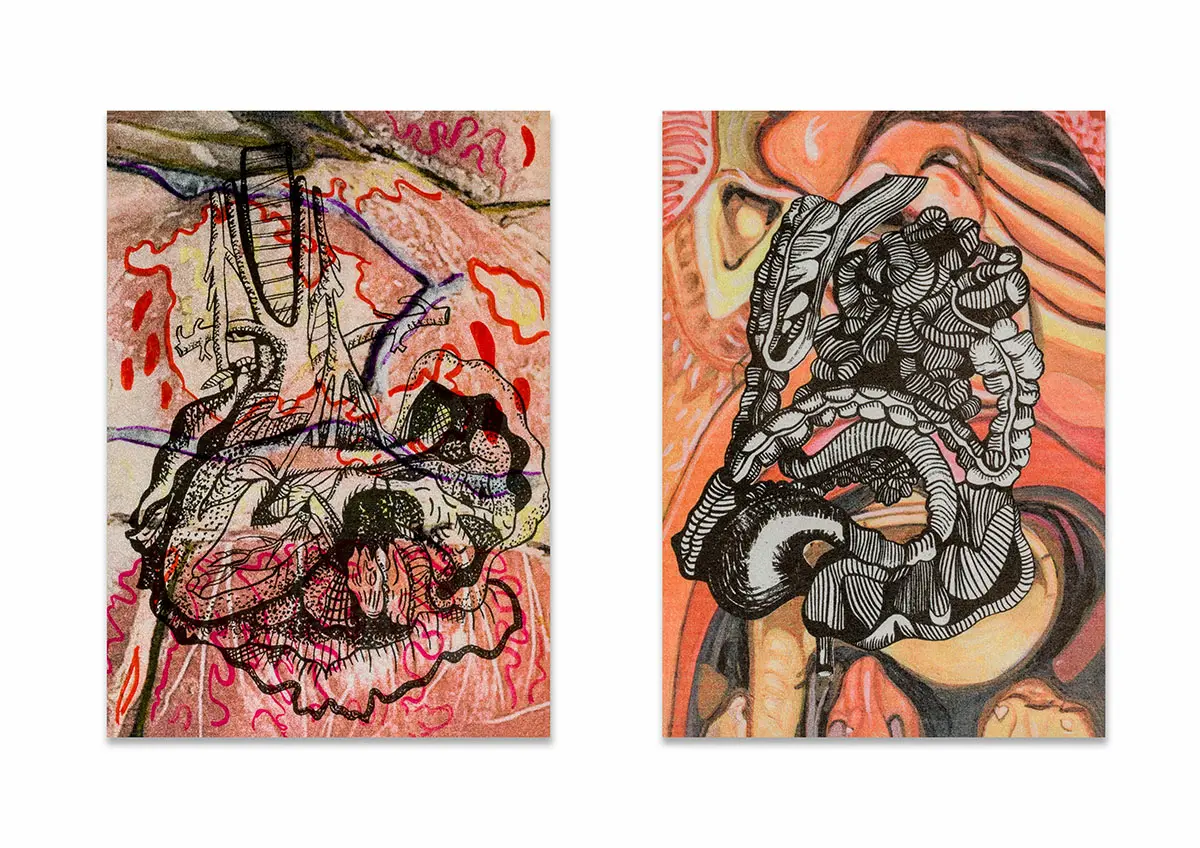
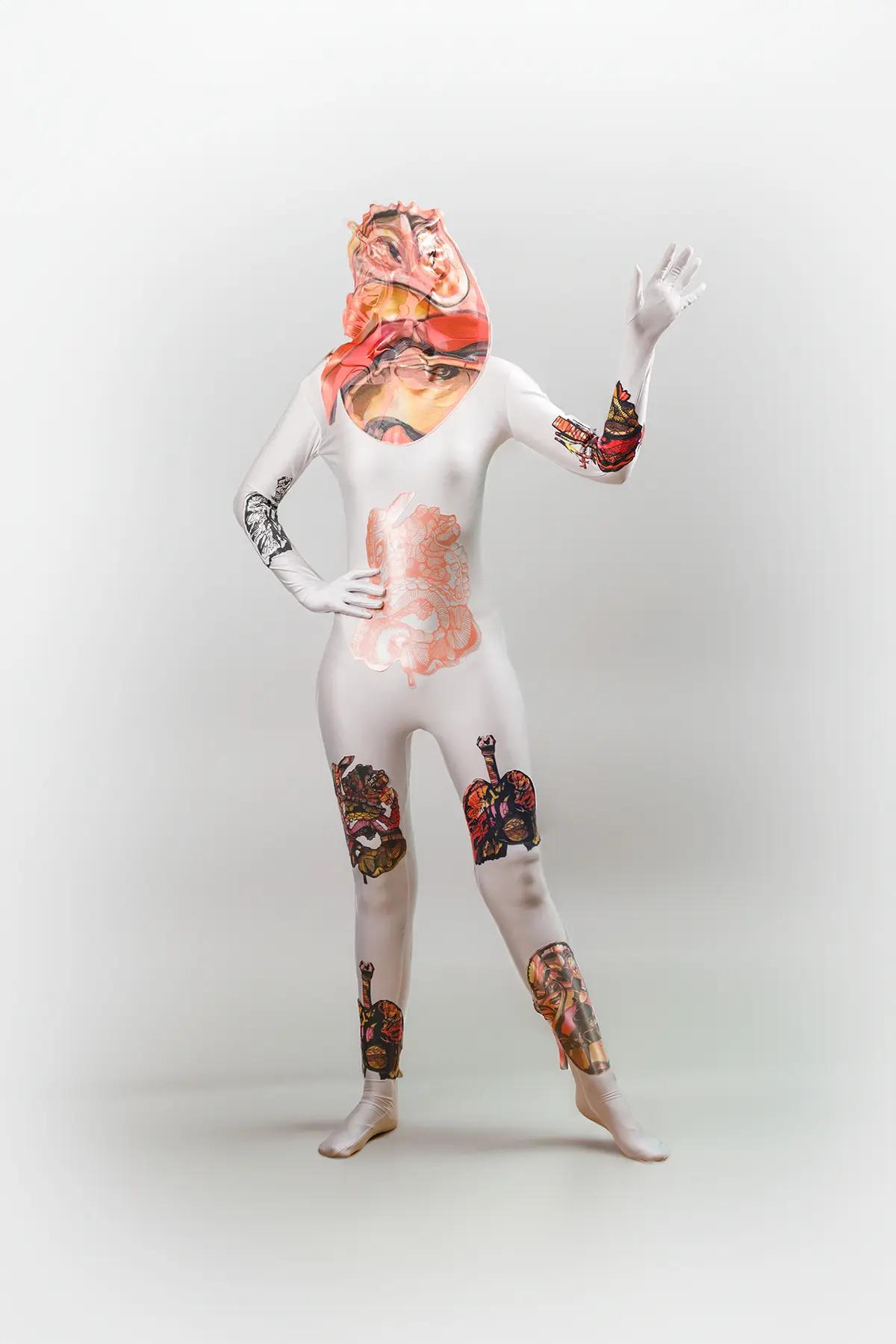
In this project, I drew inspiration from The Body Intelligence Collective, a dance group whose stage performance, Digital Umbilical, engaged the audience’s bodily processes as a rhythmic foundation for movement. Inspired by their concept, I set out to visually enhance and redesign their costumes. It was important for me to communicate their central focus on bodily anatomy while preserving the decorative richness historically associated with stage performance wear. To achieve this, I treated the dancer’s body as a canvas, reinterpreting medieval anatomical illustrations, often characterised by stylised inaccuracies due to the religious persecution of human dissection at the time, and merging them with traditional embellishment motifs found in early-twentieth-century dance costumes, such as woodblock-inspired patterns. Using medieval anatomical studies as a starting point, I created stylised ink paintings of internal organs, including the heart, kidneys, intestines, and lungs. These illustrations were then developed into textile print variations and sampled on different metallic Lycra fabrics using heat-press and screen-printing techniques in A4, A3, and A2 formats.
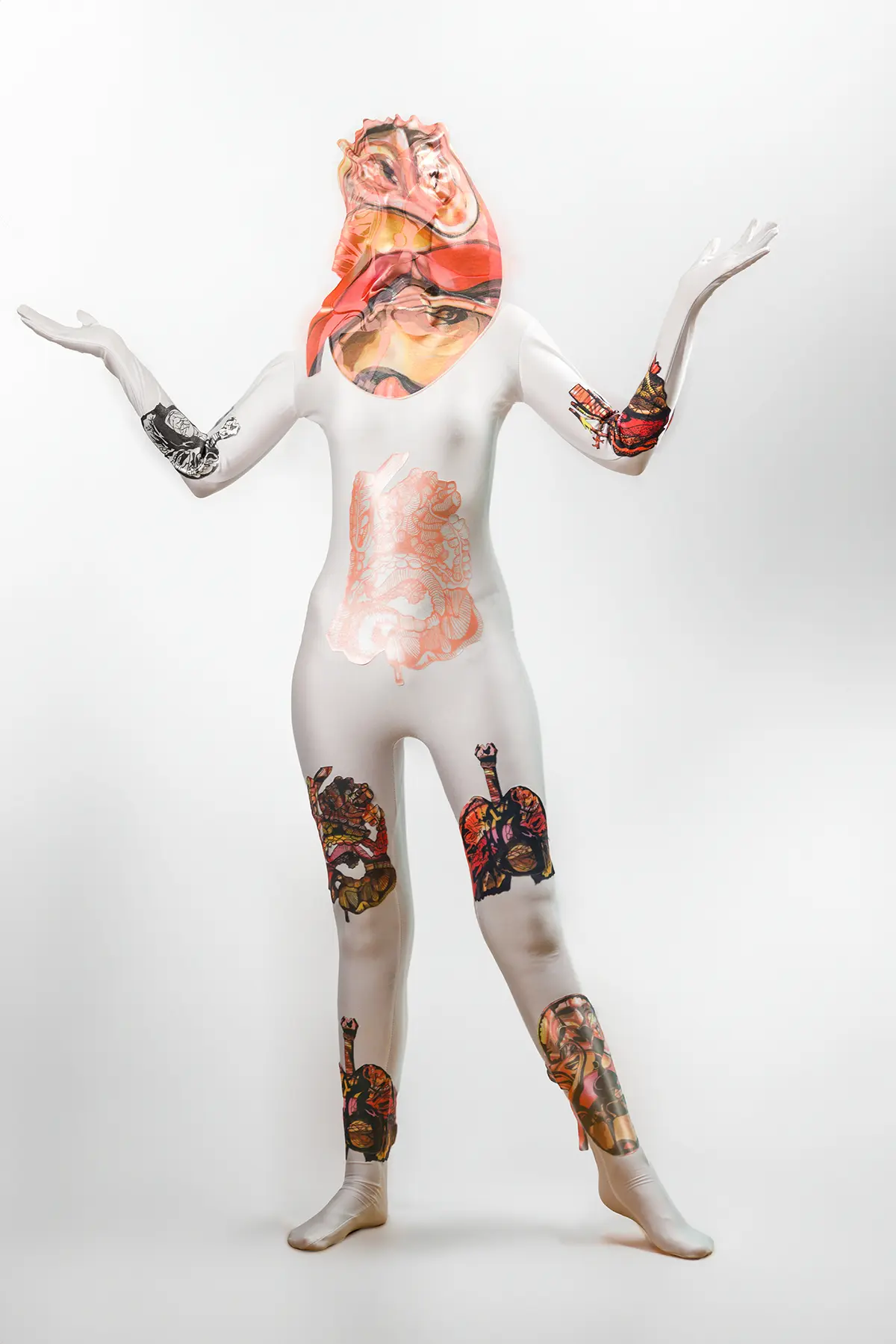
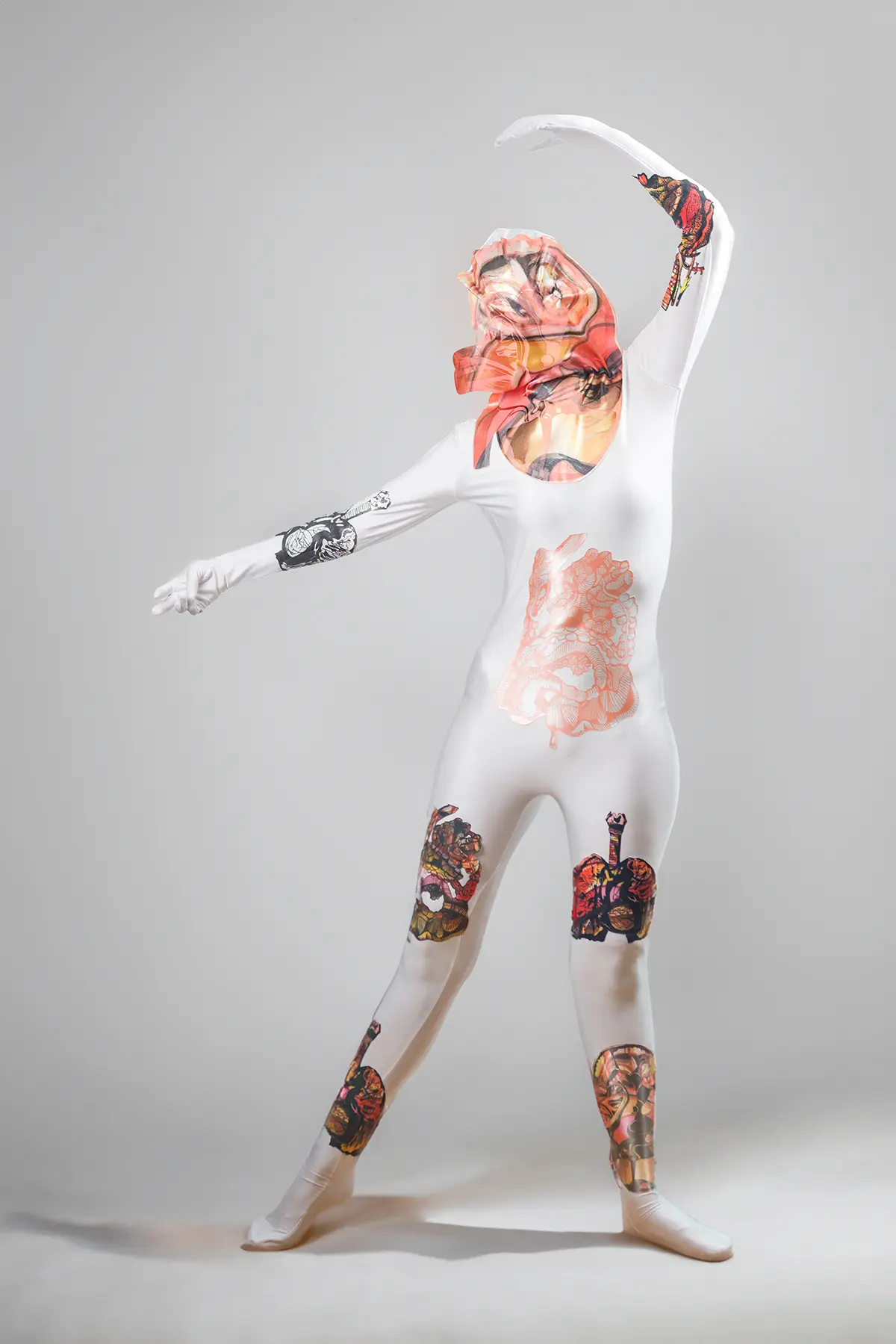
Photos 2:
After experimenting with the developed textile print samples on the stand and creating digital visualisations to assess print placement on the body, I finalised the composition for the metallic Lycra bodysuit. The organ illustrations were printed separately and then appliquéd onto the garment to achieve greater dimensionality and clarity of form. The finished piece is presented on the dancer in motion, demonstrating how the anatomical imagery interacts with the body during performance.
Portfolio Pages:
The selected portfolio pages for the Human Anatomy project document my process of transforming the original performance costumes of The Body Intelligence Collective dancers into an alternative bodysuit design. These pages trace the development from my initial research combining Medieval and Early Renaissance anatomical illustrations with my own ink drawings as the foundation for an all-over body print through to the translation of these visuals into textile designs. They also present experiments in multi-step fabric printing and the development of 3D silhouettes using paper and fabric on the stand. The sequence concludes with the construction of the final costume and its presentation on the body in motion during performance.
Download PDF Version
Arachne
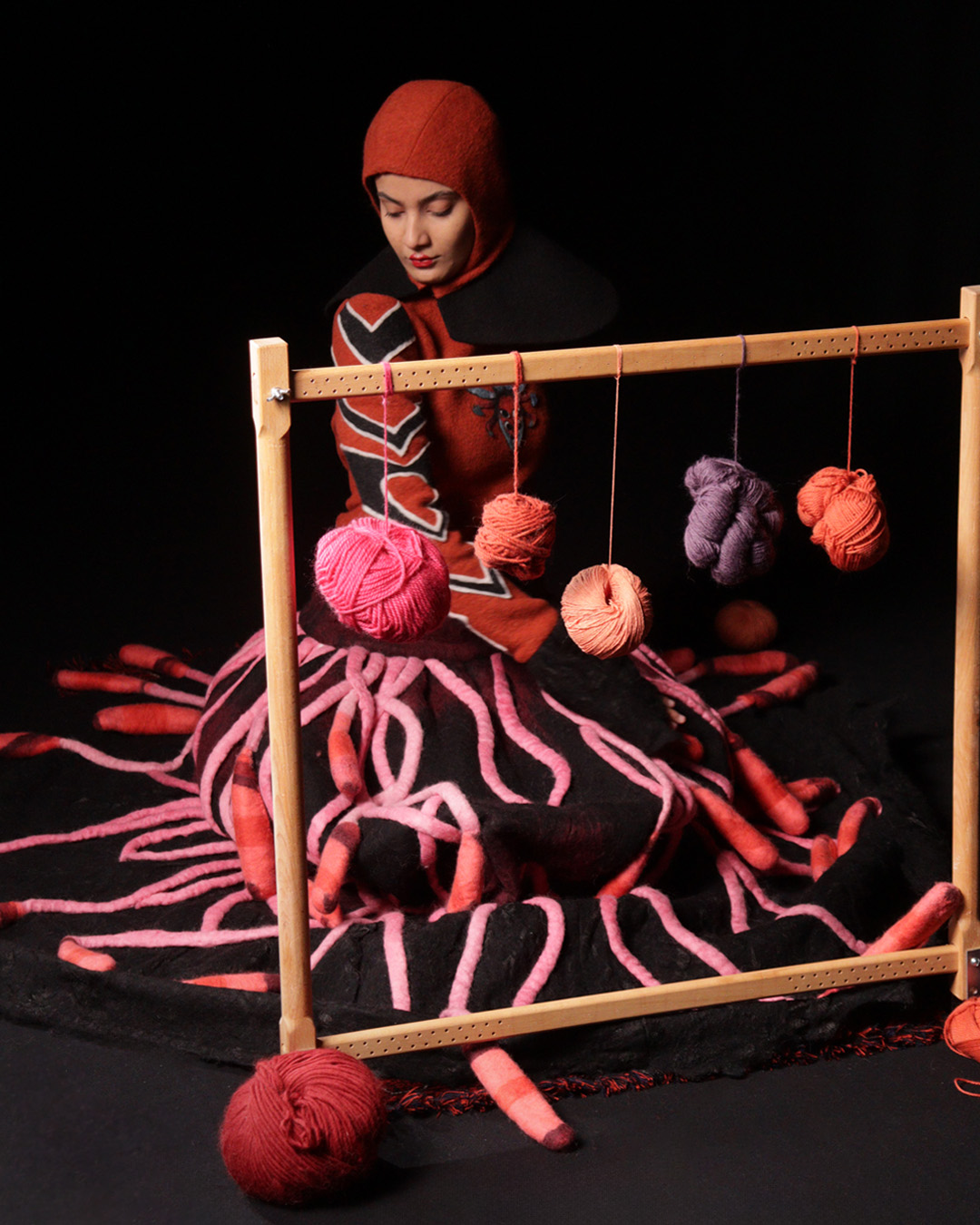
This project reinterprets the myth of Arachne, a gifted young weaver who defies the goddess Minerva and is transformed into a spider as punishment
Close